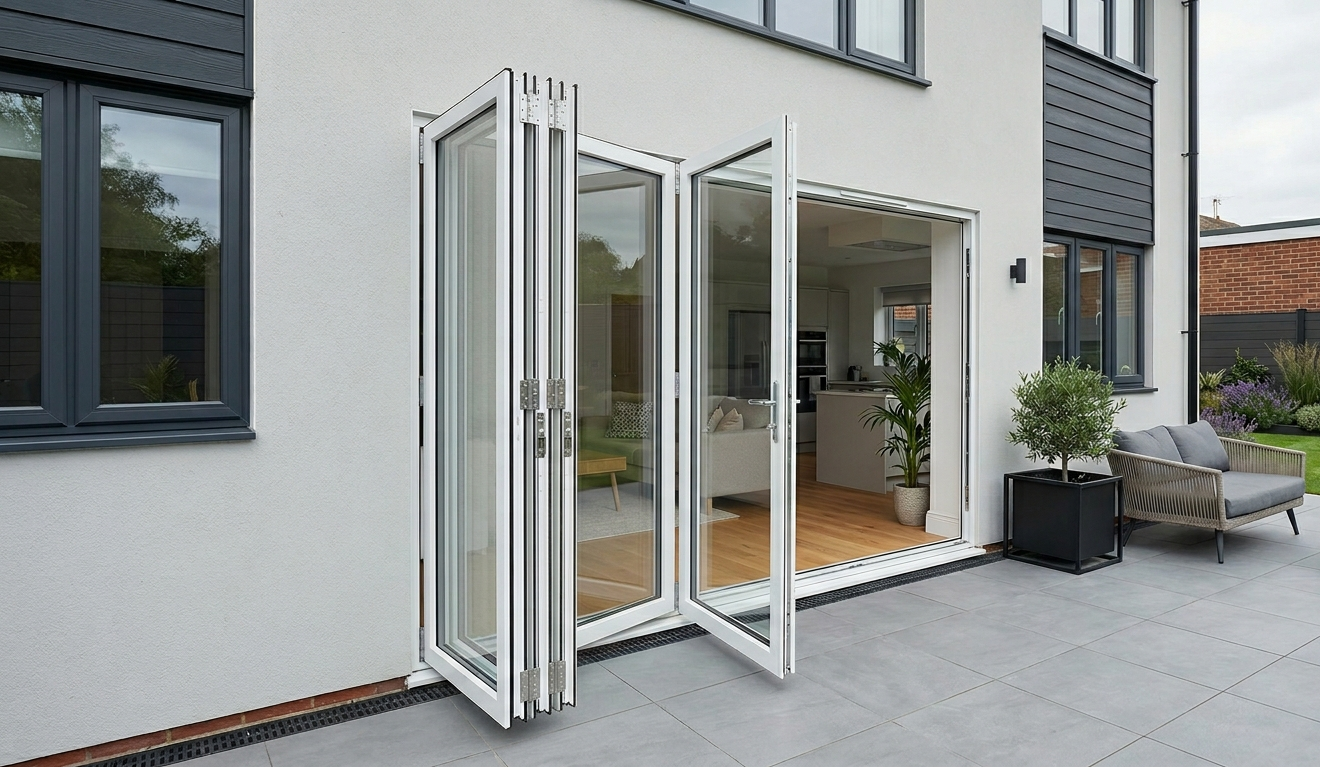
Bifold doors are one of the most practical additions to a UK home — but like any moving system, they need attention over time. If you’ve noticed your doors sticking, dropping, or failing to lock properly, you’re not alone. These are some of the most common issues homeowners encounter, and in most cases, bifold door repair is a far more practical solution than replacement.
This guide walks you through what to look for, what’s causing it, and when it’s time to call a professional.
Why bifold doors often develop problems over time
Bifold doors are made up of multiple panels, rollers, hinges, and locking points, all working together across a single track. That complexity is what makes them such an elegant design. It’s also why they’re more susceptible to gradual wear than a standard door.
Seasonal changes in temperature and humidity cause door frames and panels to expand and contract. Over time, this leads to subtle shifts in alignment. Rollers and tracks accumulate dust and debris. Hinges loosen. The result is a system that worked perfectly when installed but starts to show strain with regular use.
Bifold door repairs, when addressed early, are typically straightforward and cost-effective, and far less disruptive than a full replacement.
The most common bifold door repair issues homeowners notice
Doors sticking or difficult to open
This is usually the first sign something needs attention. You might notice resistance when pushing the panels along the track, a grinding or dragging sensation, or one panel that simply won’t move freely.
The most likely causes are:
- Debris or grit in the bottom track
- Worn or damaged rollers
- Slight track misalignment
- A panel that has dropped and is catching on the floor
In most cases, a clean and adjustment is all that’s needed. If rollers are worn beyond that, replacement is straightforward and much less disruptive than changing the whole door.
Doors not closing flush
If your bifold doors won’t sit flush when closed, you’ll often notice a visible gap along the edge, draughts coming through, or rattling in windy conditions.
This is almost always an alignment issue. Panels can shift over time, particularly in older installations, causing them to sit slightly out of square. A sliding door repair job of this kind typically involves adjusting the roller height or realigning the track, rather than anything structural.
Dropped or misaligned panels
A dropped panel is easy to spot: the bottom edge will catch on the frame or threshold as you try to open it, and there’ll be an uneven gap at the top or sides. This is common in heavier glass panels, where the weight gradually pulls the hinge or roller out of position.
Left unaddressed, a dropped panel causes additional wear across the whole system. Getting it corrected early prevents the problem from compounding.
Locking problems and security concerns
Lock failure is one of the most important reasons to seek bifold door repair promptly. If a lock won’t engage, the handle is stiff or loose, or the multipoint locking system doesn’t feel right, the cause is often misalignment rather than a failed lock mechanism.
When panels aren’t sitting correctly, the locking points don’t line up with the keeps in the frame, so the lock can’t engage fully. This is a security issue that shouldn’t be left unresolved.
What’s normal wear vs what needs bifold door repair
Some minor changes in how your doors feel are perfectly normal, particularly through seasonal changes. Here’s a quick guide:
Normal wear:
- Slight stiffness in winter or after a wet spell
- Minor variation in how easily the doors slide
- Very slight movement over time
Needs attention:
- Doors that are hard to open or close on a regular basis
- Visible misalignment or uneven gaps
- Doors that won’t close flush
- Locking points that don’t engage
- Draughts or rattling when closed
- Any security concern
If the issue is getting worse rather than resolving itself, it’s worth getting it looked at. Bifold door repairs are typically much more cost-effective when addressed early.
Can bifold door locks be repaired or replaced?
In many cases, yes. Bifold door lock repair is a common job, and it’s often less involved than homeowners expect.
When alignment is the underlying cause, correcting the panel position will often resolve the locking issue entirely, with no need to touch the lock itself. Where the lock mechanism has genuinely failed through wear or damage, bifold door lock replacement is usually straightforward. Modern multipoint locks are designed to be serviceable, and upgrading to a higher-security lock at the same time is worth considering. If you’re thinking about bifold door lock replacement as part of a broader security review, it’s worth familiarising yourself with residential door security standards, particularly for rear-facing access points, which are most commonly targeted.
When bifold door repairs are better than replacement
In most cases, bifold door repairs are the right call. The mechanical components that cause problems, such as rollers, hinges, tracks, and locks, are all serviceable parts. Replacing a full door system to fix a worn roller or a misaligned panel is rarely necessary and rarely cost-effective.
Repair preserves your existing glazing (which typically represents the bulk of a door’s value), causes far less disruption to your home, and extends the working life of the system considerably. The material and construction of your doors plays a significant role in long-term performance, and this guide to bifold door types and installation covers what to expect from different frame materials and why quality installation matters.For more on weighing up your options, take a look at our guide on when to repair or upgrade your patio doors, or browse our full door repairs service.
When to call a professional for bifold door repair
Some bifold door issues are easy enough to manage yourself, such as cleaning tracks, lubricating rollers, and tightening loose screws. But there are situations where professional attention is the right move:
- The problem has persisted despite basic maintenance
- A panel has dropped and is catching on the threshold
- Locks won’t engage or the door can’t be properly secured
- You’ve noticed structural movement in the frame
- DIY adjustments haven’t resolved the issue
If security is a concern, don’t delay. Our door servicing and realignment service covers diagnostics, adjustment, and full repair for bifold and sliding door systems.

County Secure