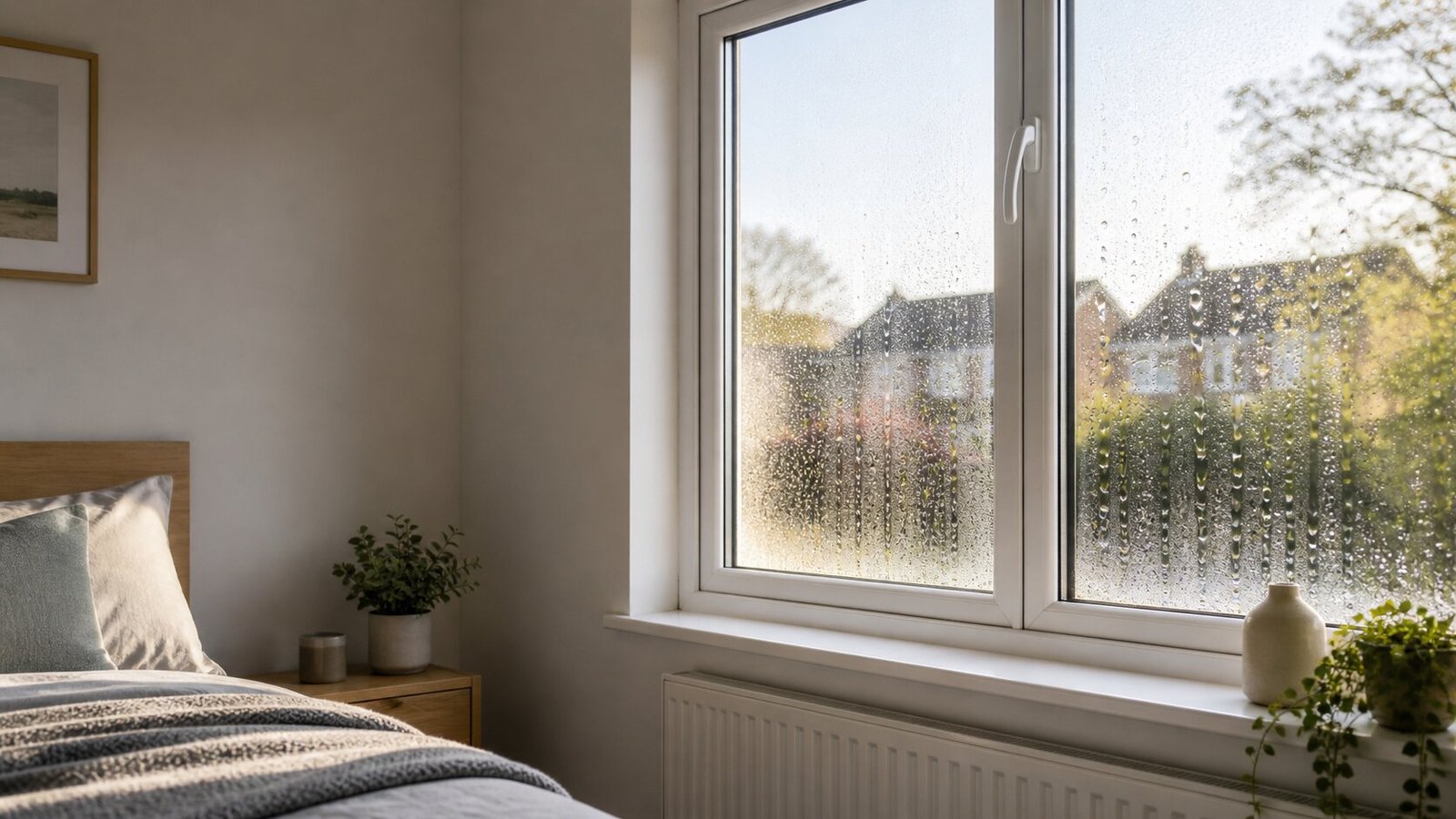
You wake up on a warm April morning and notice moisture on your windows. It doesn’t feel right — condensation is supposed to be a winter problem. By this time of year, you’d expect clear glass and fresh air, not the same foggy patches you were dealing with in January. It’s confusing, and it’s a surprisingly common experience.
The instinct is often to assume something is wrong — with the windows, the house, or both. But condensation on windows in warmer months is rarely a sign of a serious fault. More often, it’s the result of changing patterns in how you use your home, combined with seasonal shifts in temperature and humidity. Understanding the difference is what determines whether you need to improve ventilation, address a lifestyle habit, or look more closely at the windows themselves.
This guide helps you work through exactly that.
Why Condensation on Windows Doesn’t Just Happen in Winter
The basic science doesn’t change with the seasons. Condensation forms when warm, moist air meets a cooler surface — think of the outside of a cold glass on a summer’s day. The air cools when it makes contact with the glass, loses its ability to hold moisture, and deposits water droplets on the surface.
In winter, this is easy to understand: cold air outside, warm air inside, and glass as the coldest surface in the room. But spring and summer introduce their own version of the same dynamic. Warm days give way to cool nights, and the temperature gap between indoor air and glass can still be significant — particularly in the early morning.
There are also factors specific to warmer months that increase moisture levels in the home:
- Increased cooking and showering as daily routines shift
- Drying laundry indoors on rainy days
- Houseplants actively releasing moisture
- Windows kept closed for noise or security reasons
- Reduced heating, which normally circulates air and dries out the atmosphere
Window condensation causes in spring and summer are therefore less about temperature extremes and more about humidity building up without anywhere to go.
The Most Common Window Condensation Causes in Warmer Months
Each season brings its own pattern. In spring and summer, the following tend to be the main drivers of moisture on windows:
- Less heating. Central heating does more than warm a room — it circulates air and reduces indoor humidity. When it’s switched off or used sparingly, that drying effect disappears.
- Inconsistent window use. In winter, people open windows less. In summer, the same is true for different reasons — noise, security, or simply forgetting. Stale, humid air has nowhere to go.
- Overnight temperature drops. Even in summer, nights can be significantly cooler than days. Glass cools quickly and becomes a condensation surface before the room warms up.
- Increased indoor activity. More time spent cooking, showering, or simply being at home during longer evenings adds moisture to the air continuously.
- Closed internal doors. Poor airflow between rooms concentrates humidity in certain areas — often bedrooms and bathrooms — making condensation worse in specific locations.
Understanding which of these applies to your situation is the first step toward resolving the problem without unnecessary intervention.
Is It a Ventilation Problem or a Window Fault?
This is the most important question to answer — and it’s one where location matters more than anything else.
Condensation on the inside surface of the glass is almost always a ventilation issue. Moist indoor air has reached the cool glass and deposited moisture. This is normal behaviour and responds well to improved airflow. It typically clears as the day warms up and windows are opened.
Condensation between the panes is a different matter entirely. If you can see haze, fog, or streaking between the two panes of glass that cannot be wiped away, the sealed unit has failed. Moisture has entered the cavity between the panes, and no amount of ventilation will resolve it. This is a window fault, not an environmental one. Research into double glazing repairs and maintenance confirms that condensation between panes indicates broken seals — and while it doesn’t always require full window replacement, the glazed unit itself will need addressing.
Condensation only in certain rooms usually points to an airflow imbalance — often a bathroom or kitchen without adequate extraction, or a room with a closed door that’s trapping humidity.
Persistent morning condensation that clears by mid-morning is typically an overnight humidity issue, resolved by improving window ventilation rather than replacing anything. Government research into ventilation and indoor air quality in homes found that many homes — including newer builds — fail to meet adequate ventilation standards, with poor air quality correlating directly with insufficient airflow.
For guidance on improving window ventilation in your home, take a look at our dedicated advice page before assuming the windows are at fault.
How Seasonal Habits Affect Moisture on Windows
Behaviour changes more between seasons than most people realise, and those changes have a direct effect on indoor humidity.
In winter, the heating tends to run continuously, which keeps air moving and moisture levels in check. In spring, the heating goes off, but the moisture-generating activities remain. Cooking, bathing, and breathing all add water to the air — a typical household produces a significant amount of moisture each week through daily activities alone. Without adequate ventilation to remove it, that moisture accumulates.
Drying clothes indoors is a particularly significant contributor. It’s common in spring and autumn when the weather is unpredictable, and a single load of laundry can release a substantial amount of water vapour into the air. Closing the internal door to the room where it’s drying reduces the spread, but doesn’t remove the problem.
Keeping windows closed at night for security or noise reasons is another pattern that concentrates humidity overnight. The result is peak condensation in the early morning — precisely when glass is at its coolest following the overnight temperature drop.
These behavioural factors are worth addressing before any assumption is made about the windows themselves. Government guidance on damp and mould in homes notes that condensation from everyday activities is one of the most common causes of moisture problems — and that addressing ventilation is usually the most effective first response.
When Condensation in Double Glazed Windows Signals a Bigger Issue
Condensation in double glazed windows that sits between the panes is the clearest sign that something requires professional attention. Once the hermetic seal around a glazed unit fails, moist air enters the cavity and the insulating gas escapes. The glass fogs up in a way that won’t clear, regardless of how well ventilated the room is.
This matters beyond aesthetics. A failed sealed unit no longer performs its insulating function — heat transfers more easily through the window, and the energy efficiency of that pane is significantly reduced. Left unaddressed, the problem won’t improve on its own.
The good news is that in most cases, the frame itself remains structurally sound. Addressing this typically means replacing the glazed unit rather than the entire window. For more information on what’s involved, take a look at our double glazing glass replacement options — in many cases it’s a faster and less costly repair than homeowners expect.
It’s also worth noting that damp and mould in homes carry recognised health implications, particularly for those with respiratory conditions. Persistent condensation that isn’t addressed can contribute to that risk, which is another reason not to leave it unresolved.
What You Should Do Next (Without Jumping to Replacement)
Before making any decisions about your windows, work through a simple assessment:
- Check where the condensation appears. Inside surface = ventilation. Between panes = unit failure.
- Note when it happens. Morning only and clears quickly = likely overnight humidity. Present throughout the day = more persistent issue.
- Look for room-specific patterns. If it’s only in the bathroom or kitchen, extraction is the first thing to address.
- Try improving airflow first. Open trickle vents if you have them. Open windows briefly morning and evening. Use extraction fans consistently.
- Monitor over a week or two. If the problem responds to ventilation improvements, it’s environmental. If it persists or sits between the panes, get a professional view.
Most condensation on windows in spring and summer is solvable without touching the windows at all. If you do need a professional assessment — whether for window condensation causes that aren’t responding to ventilation changes, or for a unit that’s clearly failed — our professional window repair assessment can help you understand what’s actually needed before any decisions are made.
If you’re unsure whether your condensation is a ventilation issue or a window fault, an assessment is often all it takes to get clarity — and in most cases, the right repair or airflow improvement is all that’s needed.

County Secure