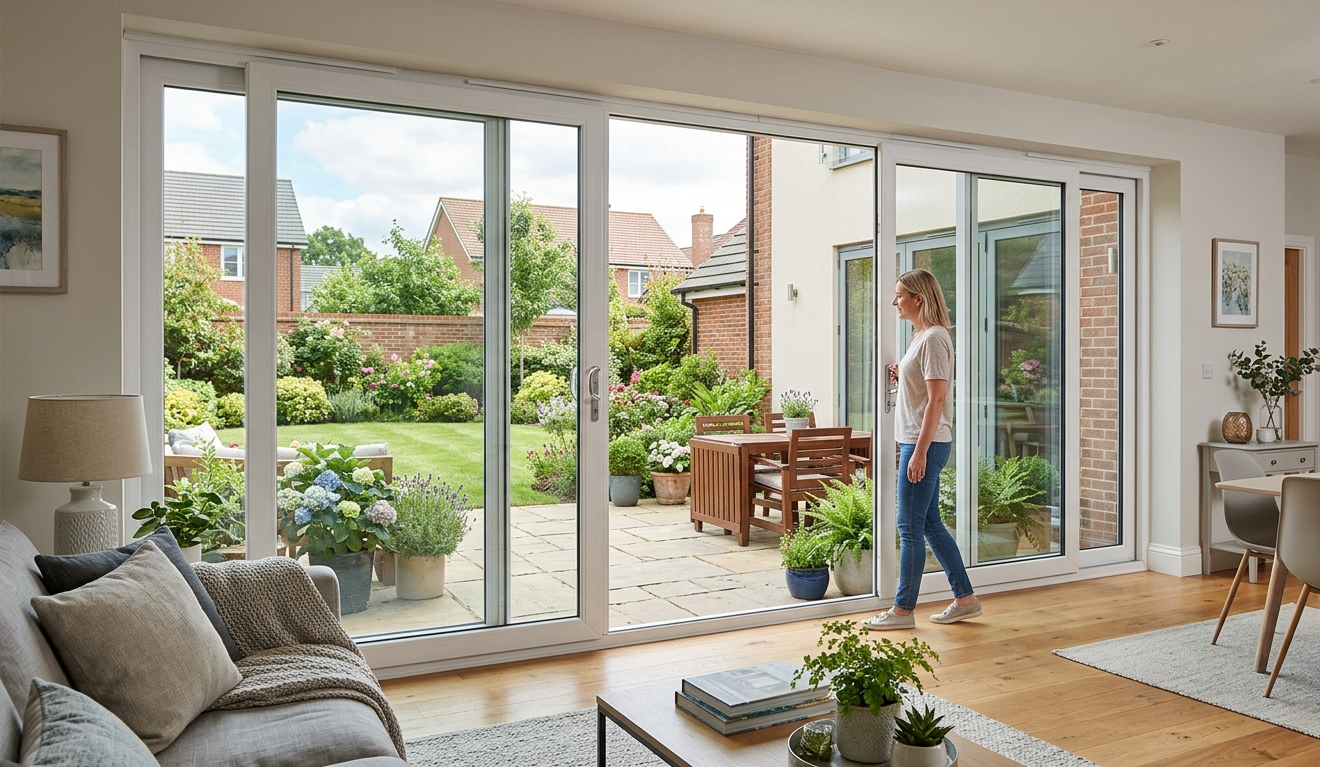
The first warm weekend of the year has a way of revealing problems you didn’t notice over winter. You slide the patio door open and it drags. You try to lock it before heading out and the handle doesn’t quite feel right. These things tend to go unnoticed when doors are used infrequently, but as usage increases through spring and summer, minor faults become hard to ignore.
It’s not just increased use that brings issues to the surface. The shift from winter to spring introduces a combination of factors — greater daily demand, temperature-driven movement in frames and panels, and the gradual effects of months of reduced maintenance. Together, they can turn a minor irritation into something that genuinely affects the security and comfort of your home.The good news is that most patio door problems have straightforward causes, and patio door repair is usually all that’s needed to get things working properly again. Catching issues early almost always means a simpler, less costly fix.
Why Patio Doors Start Showing Problems in Warmer Months
Patio doors are used far more frequently from spring onwards. That increase in daily use puts more demand on rollers, tracks, seals, and locking mechanisms that may have stiffened or shifted during the colder months. A door that was opened a handful of times over winter suddenly becomes a main thoroughfare on warm days, and any existing weakness quickly becomes apparent.
Temperature changes also play a significant role. As frames and panels warm up, materials expand slightly. In a door that’s correctly aligned and in good condition, this isn’t an issue. But in a door that’s already slightly out of true, thermal expansion can push it further out of alignment, making sticking, poor sealing, and locking difficulties noticeably worse.
Debris is another factor that’s easy to underestimate. Grit, leaf matter, and compacted dirt can accumulate in tracks over autumn and winter, and as the door starts being used regularly again, that debris begins to affect the rollers and cause resistance. Most issues that appear in spring are mechanical rather than structural, and patio door repairs at this stage are typically minor. Early attention prevents them from developing into something more involved.
Sticking or Hard-to-Slide Patio Doors
A door that used to glide smoothly but now requires effort to move is one of the most common complaints homeowners notice in spring. Sliding patio doors operate on a roller and track system, and when either component is compromised, resistance follows quickly.
Common reasons a patio door sticks or drags:
- Debris or grit packed into the bottom track
- Worn or damaged rollers no longer running smoothly
- The door dropping slightly and catching on the frame or threshold
- A track that has shifted or warped over time
The important thing is not to force it. It’s a natural instinct to push harder when a door doesn’t move freely, but repeatedly doing so accelerates wear on the rollers and track and can damage the frame over time. What begins as minor resistance can become a door that barely moves at all if the underlying cause isn’t addressed.
A sliding door repair carried out at this stage, whether that’s a track clean, roller adjustment, or roller replacement, is far simpler than dealing with the damage caused by ignoring the problem. If the door feels uneven as it moves, or one side drags more than the other, that usually points to a dropped panel or roller issue. Both are repairable without replacing the door.
Patio Door Lock Issues You Shouldn’t Ignore
Lock problems on patio doors are easy to put off, but they’re one of the most important things to address promptly. A door that doesn’t lock properly overnight, or one where the handle requires a firm lift and persuasion to engage, is a security vulnerability that shouldn’t be left unresolved.
Patio door lock repair is often simpler than homeowners expect. In many cases, the lock mechanism itself isn’t at fault. Misalignment is the more likely cause, where the door has shifted slightly in its frame so the locking points no longer meet the keeps cleanly. Correcting the door’s position often resolves the issue entirely, without needing to touch the lock at all.
Where the mechanism has genuinely worn or failed, patio door lock replacement is usually a straightforward job. Security guidance on patio and French door lock standards recommends that lock cylinders meet independently tested standards, and that handles are rated accordingly. A repair visit is a practical opportunity to check that existing hardware is appropriate for the door type and in good working order.
A stiff handle, a lock that requires several attempts to engage, one that feels loose or imprecise, or a door that won’t sit flush in its frame when locked are all signs that shouldn’t be dismissed. Patio doors, particularly at the rear of a property, are a common point of entry in opportunistic burglaries, and a lock that’s not working as it should offers far less protection than one that is.
Draughts, Gaps and Alignment Problems
If your patio doors let in a noticeable draught when closed, or you can feel air movement around the edges on a windy day, the seals or alignment need attention. This type of problem is easy to overlook during spring and summer when warmth makes it less uncomfortable, but it won’t resolve itself and tends to worsen over time.
Signs to watch for:
- A visible gap along the edge of the door when closed
- Rattling in windy weather, even with the door fully shut
- Cold air coming through in the evenings despite the door being closed
- The door sitting unevenly in the frame, higher on one side than the other
These problems usually stem from the door dropping in its frame or the seals compressing and losing their effectiveness. Rubber and brush seals have a finite lifespan, and once they stop forming a proper contact with the frame, draughts and noise follow. In many cases, realigning the door and replacing worn seals is all that’s required. It’s worth acting on draughts sooner rather than later. Gaps around external doors are a recognised source of heat loss and higher energy bills, and an unaddressed alignment problem tends to worsen progressively as the door continues to move and settle under its own weight.
When Small Issues Turn Into Bigger Repairs
Most patio door faults start small. A slight resistance when opening, a handle that needs a firm push, a faint whistle of air on a windy night. On their own, none of these seem urgent. Left alone, they tend to compound in ways that make eventual repairs more complex and more costly.
A door that catches slightly on the track wears the rollers faster. Worn rollers increase the load on the frame and locking mechanism. A lock that’s been straining against misalignment eventually fails. Seals that aren’t replaced gradually allow more moisture in, which can affect the frame and threshold over time. What started as a five-minute adjustment becomes a more involved job that may affect multiple components.The cost and complexity of patio door repair increases significantly when underlying issues are left to develop. Addressing things at the start of the higher-use season, when problems first become apparent, usually means a faster and less disruptive fix. It’s also the point at which there’s the most to gain — a door that’s properly maintained through the summer months will be in far better condition going into autumn.
When to Call for Patio Door Repairs
Some maintenance tasks are manageable at home: cleaning tracks, wiping down seals, and applying a silicone-based lubricant to rollers. But there are clear signs that professional attention is the right call, and waiting rarely makes them easier or cheaper to resolve.
Consider booking a patio door repair assessment if:
- The door sticks or drags regularly despite cleaning the track
- The lock won’t engage cleanly or requires significant effort
- There are persistent draughts even when the door is fully closed
- The door sits unevenly in its frame or has visible gaps at the edges
- Any attempt to adjust the door yourself hasn’t resolved the issue
- There’s a security concern, however minor it seems
Our professional door repair service covers patio door diagnostics, roller replacement,hardware upgrades, and full realignment. If you’re unsure whether your patio door needs repair or something more, our guide on deciding between repair and upgrade can help you work through the options.If your patio door isn’t performing as it should this spring, getting it checked early is the most cost-effective approach. Get in touch and we’ll assess what’s needed.

County Secure