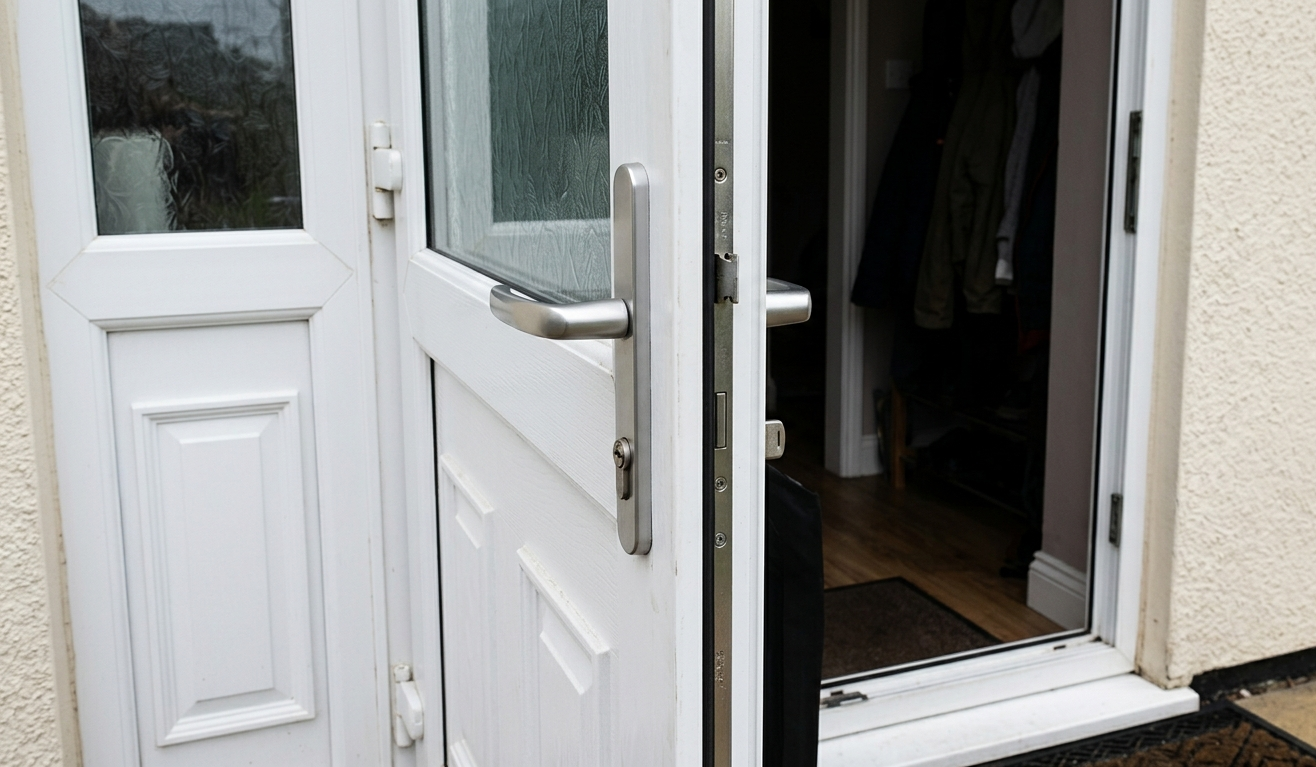
You go to close your front door and something feels off. There’s a slight scrape along the bottom, or the handle needs more effort than usual. Maybe there’s a gap you don’t remember seeing before, or the key no longer turns as smoothly as it should. If any of this sounds familiar, there’s a good chance you have a uPVC door dropped situation on your hands.
It’s more common than most people realise, and it’s rarely as serious as it sounds. A dropped uPVC door is usually a mechanical issue rather than a structural one, and in most cases a professional repair is all it takes to put things right. The key is recognising the signs early and knowing when to act.
What Does a Dropped uPVC Door Actually Mean?
When a uPVC door drops, it means the door panel has shifted downward or sideways within the frame. Rather than sitting square with even gaps all around, it tilts or slides slightly out of position. The hinge side typically bears the load, and over time the door gradually pulls away from where it should be.
Think of it like a picture frame that’s been knocked slightly on one side. The picture itself is fine, but the frame no longer sits true. A dropped uPVC door works the same way — the door leaf is intact, but its position within the frame has changed, and that affects how well it closes, seals, and locks.
This matters beyond just comfort. A door’s ability to perform depends on it sitting correctly in its frame. Air leakage, heat retention, and weatherproofing are all part of how windows and doors are rated for energy efficiency, and a door that’s out of alignment compromises all three.The reassuring thing is that a uPVC door repair of this kind is typically straightforward. It usually doesn’t mean the door needs replacing.
Common Signs Your uPVC Door Has Dropped
Knowing what to look for helps you catch the problem early, before it starts affecting other components. These are the most common indicators:
- The bottom of the door drags or scrapes when opening or closing
- Visible gap appearing at the top or on the latch side of the frame
- The door feels stiff to close and requires a firm push to shut
- The handle needs to be lifted harder than usual to engage the lock
- Draughts coming through even when the door is fully closed
- Rattling or movement when the door is shut
Any one of these on its own might be minor. Several of them together, or any that have been worsening over time, point clearly to a uPVC door dropped issue that needs attention. Draughts in particular are worth taking seriously — gaps around an external door are a recognised source of preventable heat loss and will only widen if the underlying alignment isn’t corrected.
Why uPVC Doors Drop Over Time
There’s rarely a single dramatic cause. A dropped uPVC door is almost always the result of gradual wear across several components working together.
Hinge wear and loosening is the most common factor. The hinges carry the full weight of the door panel, including the double-glazed unit inside it, every single time the door is used. Over months and years, the screws can work loose and the hinge mechanism itself can wear, allowing the door to shift downward on that side.
The weight of the glazing unit plays its part too. Modern uPVC doors contain heavy double or triple glazed panels. That weight is concentrated on the hinges, and even a well-installed door will place significant ongoing stress on those fixings.
Seasonal movement is another contributor. uPVC expands and contracts with temperature changes throughout the year. A door that closes perfectly in winter may feel slightly different in summer. When a door is already marginally out of alignment, this thermal movement can make the problem noticeably worse. Poor alignment also places additional strain on the multipoint locking mechanism — a common cause of uPVC door lock stiffness and mechanism wear that develops gradually if the underlying hinge issue isn’t addressed.
General usage over time compounds everything. A heavily used front door simply accumulates wear faster. And in a small number of cases, poor installation creates a situation where the door was never quite right from the start, making problems more likely to appear earlier.
Can You Fix a Dropped uPVC Door Yourself?
There’s a degree of basic uPVC door hinge adjustment that’s technically possible as a DIY task. Most modern uPVC hinges have small adjustment screws that allow the door to be moved slightly in multiple directions, and some homeowners are able to make minor corrections this way.
However, adjusting uPVC door hinges correctly requires understanding exactly how the door has moved and which adjustment is needed. Turning the wrong screw, or making changes without properly diagnosing the cause, can shift the door further out of alignment or put uneven pressure on other components. Modern multi-point locking strips and hinges are precision engineered, and there’s not much tolerance for error.
For a door that has dropped noticeably, or one that has been getting gradually worse over time, a professional assessment is almost always the better route. A qualified technician can identify whether the hinges need adjusting, replacing, or whether there’s another contributing factor, and correct everything in a single visit. Attempting a partial fix yourself and calling in professional help later often ends up costing more than simply getting it looked at in the first place.
When to Call a Professional for uPVC Door Repair
Some situations make professional uPVC door repair clearly the right call. These are the signs that it’s time to stop waiting:
- The door won’t lock properly, or the handle requires excessive force to engage
- DIY hinge adjustment has been attempted but hasn’t resolved the problem
- The door is visibly scraping on the frame or threshold, not just catching slightly
- There’s a clear gap on one side, with the door sitting unevenly in the frame
- You can see damage to the hinge itself, not just looseness
- The draught or rattling is getting worse over time, not staying consistent
A professional uPVC door hinge repair or realignment is usually a quick job, and in most cases the door can be restored to full working order without replacing any major components. For more complex cases involving worn hardware, our door hardware and hinges service covers replacements and upgrades as part of the same visit.
The important thing is not to leave it. A door that can’t be locked properly is a security issue, and a door that’s being forced into position every day will develop further problems faster. Our professional door repair service covers diagnosis, adjustment, hinge repair, and full realignment.
How to Prevent Your uPVC Door Dropping Again
Once a dropped door has been professionally corrected, a few simple habits can help keep it in good condition for longer.
Avoid slamming the door. It’s one of the fastest ways to loosen fixings and stress the hinge components. Closing it firmly but deliberately puts far less cumulative strain on the system.
Check alignment periodically, particularly after a long cold spell or an unusually hot summer. A quick visual check for uneven gaps and a smooth open and close will tell you whether anything has shifted.
Lubricate the hinges and locking mechanism once or twice a year using a silicone-based product. This reduces friction, protects the components, and makes the door easier to operate — which in turn reduces the force being placed on the hinges each time it’s used.
Book a periodic service. Having a professional check the door every couple of years allows minor issues to be caught and corrected before they become uPVC door dropped problems. Our door servicing and realignment service is designed exactly for this kind of preventative maintenance. If your door isn’t closing, locking, or sealing as it should, getting it assessed early is the most straightforward approach. In most cases, a professional adjustment is all that’s needed.

County Secure