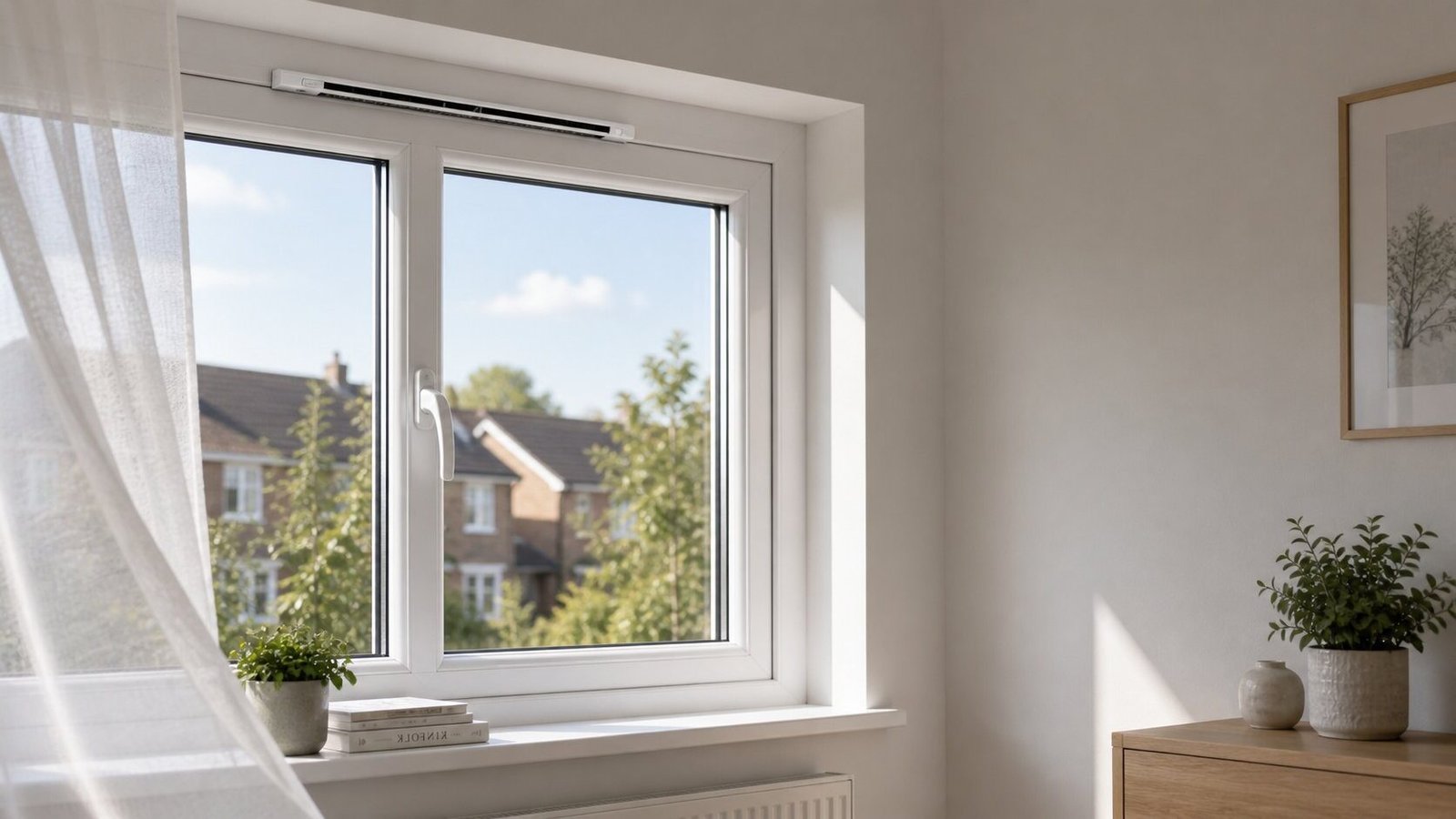
Most homes in the UK aren’t designed with summer ventilation in mind. We insulate, draught-proof, and seal — and rightly so — but come July and August, those same measures can leave a house feeling airless and humid by the end of the day. Opening windows is the obvious answer, but for many homeowners it immediately raises a question: how far is safe?
The tension between window ventilation and home security is one of the most common practical concerns of the warmer months. It’s particularly acute for ground-floor rooms, accessible rear windows, and anyone who wants air ventilation overnight without lying awake wondering whether they’ve made their home an easy target. The reassuring answer is that you don’t have to choose between the two — but it does require knowing what your options actually are.
Why Window Ventilation Matters More in Warmer Months
In winter, most homes have some natural air movement — heating systems circulate warm air, and small gaps around older windows provide a low level of background airflow. In summer, that dynamic changes. Heating is switched off, windows may stay closed for noise or security reasons, and indoor humidity has nowhere to go.
Everyday activities generate a significant amount of moisture. Cooking, showering, drying clothes, and even breathing all add water vapour to the air inside your home. Without adequate window ventilation, that moisture accumulates and can settle on cooler surfaces as condensation on windows, even in warm weather.
The causes of poor indoor air quality in warmer months tend to cluster around the same habits:
- Keeping windows shut overnight for security
- Reduced air movement when heating is off
- Drying laundry indoors on unpredictable summer days
- Cooking and bathing without adequate extraction
- Closed internal doors preventing airflow between rooms
Left unaddressed, this combination creates the same stuffy, damp conditions most people associate with winter — just during the months when you’d least expect it. Our window ventilation and draught-proofing service covers the full range of options for improving airflow in your home year-round.
The Hidden Risk: Why Open Windows Can Compromise Security
The concern is legitimate. Leaving windows open — even slightly — changes the risk profile of a property, particularly on ground floors or where windows are accessible from flat roofs, garages, or garden boundaries.
Burglary is largely an opportunistic crime. Police advice consistently notes that accessible, unsecured openings are among the most common entry points, and that summer months typically see an increase in this kind of activity as windows and doors are left open more frequently. Avon and Somerset Police’s home security guidance notes that around one in four burglaries involves no forced entry at all — the access point was simply unsecured.
This doesn’t mean you shouldn’t open your windows. It means that fully open, unrestricted windows — particularly at night or when the property is empty — carry a different level of risk than a controlled, limited opening. The solution isn’t to keep everything shut. It’s to find ways of managing the opening so that home security risks from open windows are reduced while airflow is maintained.
uPVC window ventilation in particular deserves attention here. Modern uPVC windows close and seal very effectively — which is great for energy efficiency, but means that when they are opened, even a small gap can be wider than intended if the opening mechanism isn’t correctly adjusted or restricted.
Smart Ways to Improve Window Ventilation Without Leaving Windows Fully Open
There are several practical solutions that allow controlled airflow without compromising security. What they have in common is that they work best when properly specified and correctly fitted — getting professional advice on which approach suits your window type and situation avoids the common mistake of installing a solution that either doesn’t provide enough airflow or doesn’t offer the security benefit it should.
Trickle vents and built-in solutions
Trickle vents are small, controllable openings built into the window frame that allow a continuous low level of air to pass through even when the window is closed and locked. They’re an integral part of modern building regulations — the GOV.UK existing home ventilation guide specifically advises that trickle vents should be left open and unblocked to maintain fresh air and prevent moisture build-up.
Many homes either don’t have them fitted, have them blocked or damaged, or have the wrong specification for the room size. If your windows lack effective trickle ventilation, it’s worth having them assessed — retrofitting or upgrading vents is a straightforward job when carried out as part of a professional window service.
Window restrictors and safety catches
A window restrictor limits how far a window can open, typically to a gap that allows meaningful airflow but is too narrow to allow entry. The right type and placement matters — a restrictor that’s incorrectly fitted or of insufficient quality doesn’t provide the security benefit it should. Professional fitting ensures the restrictor is matched to the window mechanism and installed securely.
Using a ventilator for window airflow
A ventilator for window frames — sometimes called a night vent lock or security ventilation stay — allows the window to be locked in a slightly open position, giving controlled air ventilation while preventing the window from being pushed further open from outside. These are particularly useful for bedrooms, but the locking mechanism needs to be compatible with the existing window hardware to function reliably. A professional can confirm whether your current windows support this option or whether any adjustments are needed first.
Why Modern uPVC Window Ventilation Can Fall Short
Older homes with draughty windows had a certain accidental advantage: the small gaps around frames provided constant background airflow without any effort from the occupant. Modern uPVC window ventilation is far more efficient, but that efficiency comes at a cost to passive airflow.
Well-sealed uPVC frames close tightly with no meaningful air movement unless a window is deliberately opened or a trickle vent is in use. As the Glass and Glazing Federation explains in its guide to the basics of home ventilation, background ventilation through trickle ventilators can provide a secure, draught-free and consistent supply of fresh air even when windows are closed and locked — but only if that built-in capability is present and functioning correctly.
If your uPVC window ventilation relies entirely on opening windows because trickle vents are absent, blocked, or faulty, you’re left choosing between fresh air and a fully locked window every time the weather warms up. Having the ventilation provision assessed and addressed properly is a more durable solution — and one that pays dividends in air quality and condensation control throughout the year, not just in summer.
Balancing Airflow and Condensation Control in Summer
Condensation on windows in summer tends to appear in the early morning — glass cools overnight, and when warmer morning air meets the cool surface, moisture deposits on the pane. It’s easy to dismiss as a weather-related annoyance, but if it’s happening regularly, it’s a sign that humidity indoors isn’t being managed effectively.
The same moisture that produces morning condensation also contributes to damp, mould, and poor air quality over time. Managing it in summer, when it’s less obviously uncomfortable, prevents it from becoming a more serious problem as the year progresses. As the Energy Saving Trust explains in its guidance on damp and condensation, without adequate ventilation indoor moisture simply has nowhere to go.
Effective window ventilation — whether through properly functioning trickle vents, controlled restricted opening, or upgraded hardware — is the most reliable way to keep moisture levels balanced. Where condensation persists despite improved ventilation, there may be a separate issue with the glazed units themselves. Our guide on ways to deal with condensation on windows can help you work out which applies.
When to Upgrade or Repair Instead of Leaving Windows Open
Sometimes the reason a window gets left fully open is a practical one — it doesn’t stay in a useful restricted position, the handle or restrictor is broken, or there’s no effective trickle vent present. These are window maintenance issues that are worth addressing directly, because they remove the ability to ventilate safely regardless of what you’d prefer to do.
Signs that your windows may need attention:
- Windows only stay fully open or fully closed, with no in-between position
- Trickle vents are absent, blocked, or no longer adjustable
- Window handles or locking mechanisms are stiff or unreliable
- The window doesn’t seal properly when closed, allowing draughts regardless
- Hinges are misaligned, preventing controlled partial opening
A window that can’t be reliably locked in a partial position leaves full opening as the only route to airflow — which puts you back at square one with the security question. In many cases, a straightforward repair or hardware upgrade restores the safe ventilation options covered in this guide and removes the dilemma entirely.
If you’re unsure whether your windows are performing as they should, checking if your windows need repair is a sensible starting point. Get in touch and we’ll assess what’s needed and recommend the most practical solution for your home.

County Secure Marketing